
API Integration
Stop moving information
between disconnected tools.
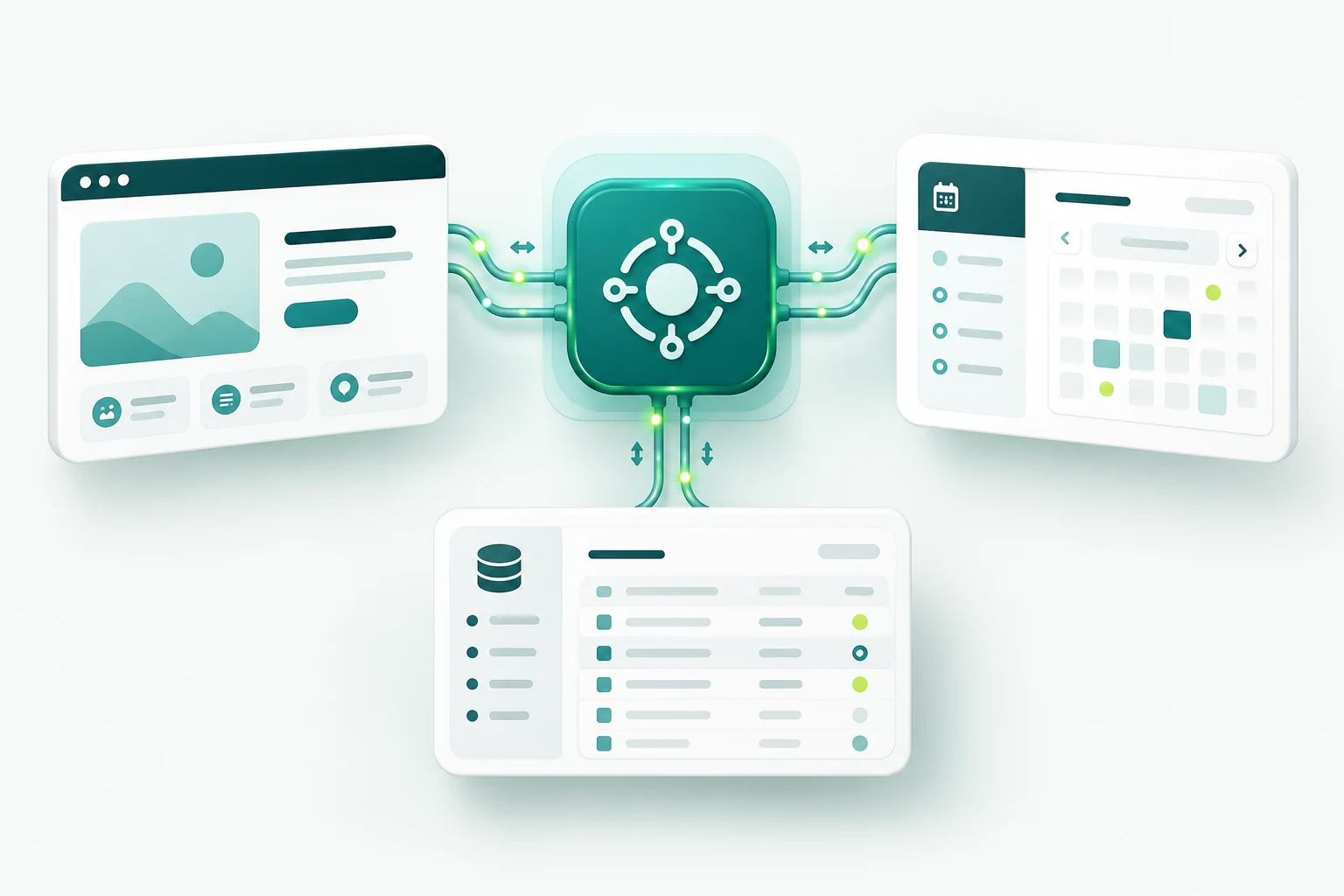
Connect WordPress, stores, forms, and business applications with the systems your team already uses. We design data flows that account for authentication, updates, failures, and the work behind the interface.

The problem behind the project
Does this sound like your setup?
Data gets entered more than once
People export files or copy enquiries, orders, and customer information between systems.
The integration works only in the happy path
Expired tokens, missing fields, or temporary API errors leave your team to find and repair the gaps.
No one can tell what happened
Without useful logs and clear status, a failed sync becomes a support investigation.
How we help
Start with the workflow.
Build the right response.
We define the source of truth for each field, when data should move, and what the receiving system expects. Authentication, rate limits, duplicate prevention, and failure handling are part of the plan from the start.
Depending on the API and workflow, we use event-driven webhooks, scheduled synchronization, or direct requests. We add appropriate logging and retry behavior so the connection can be operated after launch.
Capabilities
API Integration with a clear scope.
Third-party API connections
Link the website with CRM, booking, learning, operational, or provider systems.
Data mapping & synchronization
Translate fields and define one-way or two-way updates where supported.
Authentication handling
Implement the provider’s token or credential flow with appropriate server-side handling.
Webhooks & scheduled jobs
Respond to events or reconcile data at agreed intervals.
Failure handling & visibility
Plan retries, validation, logs, and useful administrative status.
Custom API endpoints
Expose a scoped interface for another application to interact with your system.
What this can change
A better fit for the way you work.
Less duplicate entry
Move the agreed information through a defined connection.
A more dependable workflow
Handle incomplete data and temporary failures deliberately.
Easier troubleshooting
Provide visibility into the integration’s behavior and dependencies.
How we work
A process shaped around the task.
- 01
Inspect both systems
Review documentation, access, data models, and constraints.
- 02
Map the data flow
Agree triggers, ownership, validation, and failure scenarios.
- 03
Build & test the connection
Use test environments and realistic payloads where available.
- 04
Monitor the handoff
Verify logging, operational guidance, and production behavior.
Relevant technology
Tools that support the requirement.
Relevant project work
See the workflow in practice.

Ascora + Contact Form 7
A Contact Form 7 connection to Ascora for direct form data submission.

Weather forecast integration
A weather forecast integration that presents provider data as part of the website experience.

ProScore eLearning
Passwordless access from third-party portals and tracking for lesson activity and time spent.
Questions before we start
Discuss the details with confidence.
Can you integrate an API without rebuilding our site?+
Often yes. We review the current platform and add a focused integration when the architecture allows it.
Can you support webhooks and scheduled synchronization?+
We choose the approach based on the provider capabilities and workflow. Some integrations need both event updates and periodic reconciliation.
What happens if the external API is unavailable?+
We define the expected behavior, appropriate retries, logging, and the user or administrator message for that scenario.
How do you handle duplicate records?+
We agree stable identifiers and ownership rules, then use them when creating or updating records.
What do you need from the API provider?+
Documentation, suitable account access, sample data, and any available test environment help us assess the scope and limitations.
Related expertise
Explore the next connection.
Payment Gateway Integration
A payment button is only part of the job. We connect payment providers with your website and define what happens when a transaction succeeds, fails, is cancelled, or returns a delayed notification.
WordPress Plugin Development
Build the business rules, admin tools, and connected workflows your WordPress website is missing. We develop custom functionality around the way your team and customers actually work.
Let’s work through the requirement
Ready to connect your website
with the tools your team relies on?
Share the current setup and what needs to change.
We’ll help define the scope and the next step.